Life afterwards
Electricity
In November 2025, BC Hydro said its main downtown substation would fail in an earthquake well below the current building-code standard. No comparable assessment is public for the rest of the region.
Last reviewed
At a glance
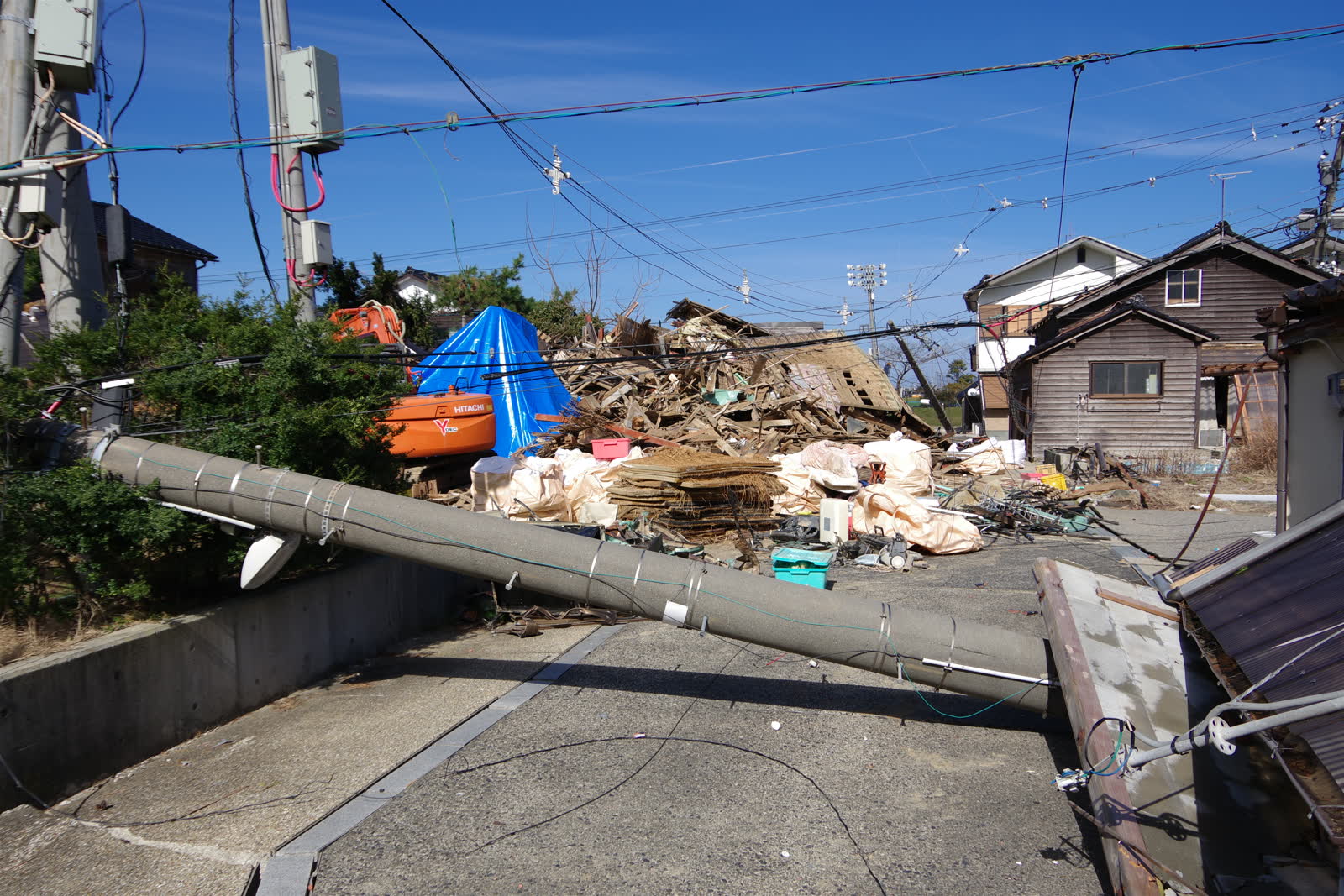
BC Hydro states that a large earthquake could leave up to two thirds of its downtown Vancouver customers without power for several weeks. Full restoration could take years.
Expected disruption: Several weeks downtown, years to restore fully
Source: West End Substation Project, Initial Application to the BCUC (CPCN), §2.2.1 Seismic Concerns and fn. 2 ↗ · BC Hydro / BCUC · 10 Nov 2025
Downtown outages could last several weeks
On 10 November 2025 BC Hydro filed its initial application to the BC Utilities Commission for the West End Substation Project, which would replace the substation that supplies much of downtown Vancouver. In the section headed “Seismic Concerns” it wrote:
“Most of the Murrin Substation site is located on seismically unstable ground with eight underground transmission circuits traversing seismically unstable soil. These transmission circuits include the four 60 kV transmission lines that radially supply Dal Grauer Substation. In a large seismic event, Murrin Substation and these underground transmission circuits could be damaged and up to two thirds of downtown customers, including all customers served by Dal Grauer Substation, could experience a lengthy outage. It could take several weeks to restore power to customers and years to completely restore the system from the damage depending on the magnitude of the seismic event.”
BC Hydro attaches neither duration to a particular earthquake: its wording is “in a large seismic event” and “depending on the magnitude”.
BC Hydro filed this in support of a project it wants approved, so the seismic consequence is the case being made. It is also the owner of the asset, in a regulatory filing, citing a seismic assessment of its own substation and conceding something against its own interest.
Murrin substation falls short of the current seismic standard
From a footnote in the same filing:
“The National Building Code of Canada (2020) requires post-disaster buildings, such as electrical substations, hospitals, and fire halls, to be operable following 1/2475-year return period earthquake ground motions. Seismic assessment of Murrin Substation found that Murrin Substation would experience significant damage and not be operable following 1/1000-year return period earthquake ground motions, far less than the 1/2475-year return period earthquake ground motions.”
A post-disaster building is one the code expects to keep working after the earthquake. A one in 2,475 year ground motion is shaking severe enough that it happens on average once in 2,475 years, so the higher the number, the rarer and the harder the shaking. Murrin was commissioned in 1947 and Dal Grauer in 1952. About 60 per cent of Murrin’s assets and 78 per cent of Dal Grauer’s are at or near the end of their working lives.
Murrin cannot be upgraded at its current site
BC Hydro’s own assessment of the alternatives:
“Murrin Substation: seismic upgrades are not feasible as they would require outages of critical transmission cables. These transmission cables are essential to the reliability of the Downtown Vancouver Electricity System and therefore cannot be taken out of service for extended periods. These seismic upgrades at Murrin Substation are also cost prohibitive.”
Until the new West End substation is in service, much of downtown stays on Murrin. Its in-service date is July 2032 at the earliest, and the regulator has not yet ruled on it.
BC Hydro’s filing of February 2019, which the regulator’s record files by fiscal year as F2020, already stated that Murrin sits on seismically unstable soil, that about half of the switchyard supplying both substations is vulnerable to settlement and to liquefaction, where saturated soil loses its strength and behaves like a liquid while the ground shakes, and that load served from both “may experience a prolonged outage after a seismic event”.
That same filing also counts about 95,000 customers in the downtown study area. The customer count and the two thirds come from different filings six years apart, so multiplying one by the other would produce a number of people nobody has published.
The Second Narrows crossing remains below the current standard
At Second Narrows, BC Hydro’s 2021 revenue requirements filing says the transmission line crossing structures “have been assessed as being critical, and at risk of sustaining damage, including possible collapse, during an earthquake of less than 1:475-year frequency”, and that losing the crossing “would result in load curtailment in the Metro Vancouver area”, which means cutting power to customers on purpose to keep the rest of the network up.
Cost, in-service date and construction start were all listed as to be determined, and the project sits in a category for future prioritization, with no commitment to build.
Murrin and the Second Narrows crossing are two named assets, and neither is a statement about the rest of the network.
BC Hydro’s newer assessment finds greater risk
In January 2011 BC Hydro stated in a press release that “BC’s electrical infrastructure has been built to withstand even a severe seismic event, such as a one in a 2,475 year event.”
Against that stands BC Hydro’s own 2025 assessment, above: Murrin not operable at one in 1,000.
Both are BC Hydro. The 2011 sentence is design intent for the system as a whole, fifteen years old. The 2025 finding is an engineering assessment of one critical asset that does not meet it.
What BC Hydro builds now is built to that standard. The Mount Pleasant substation, part of the Vancouver City Central Transmission project, is designed to operate after a disaster, with ducts and cable vaults installed below the zone where the ground would deform.
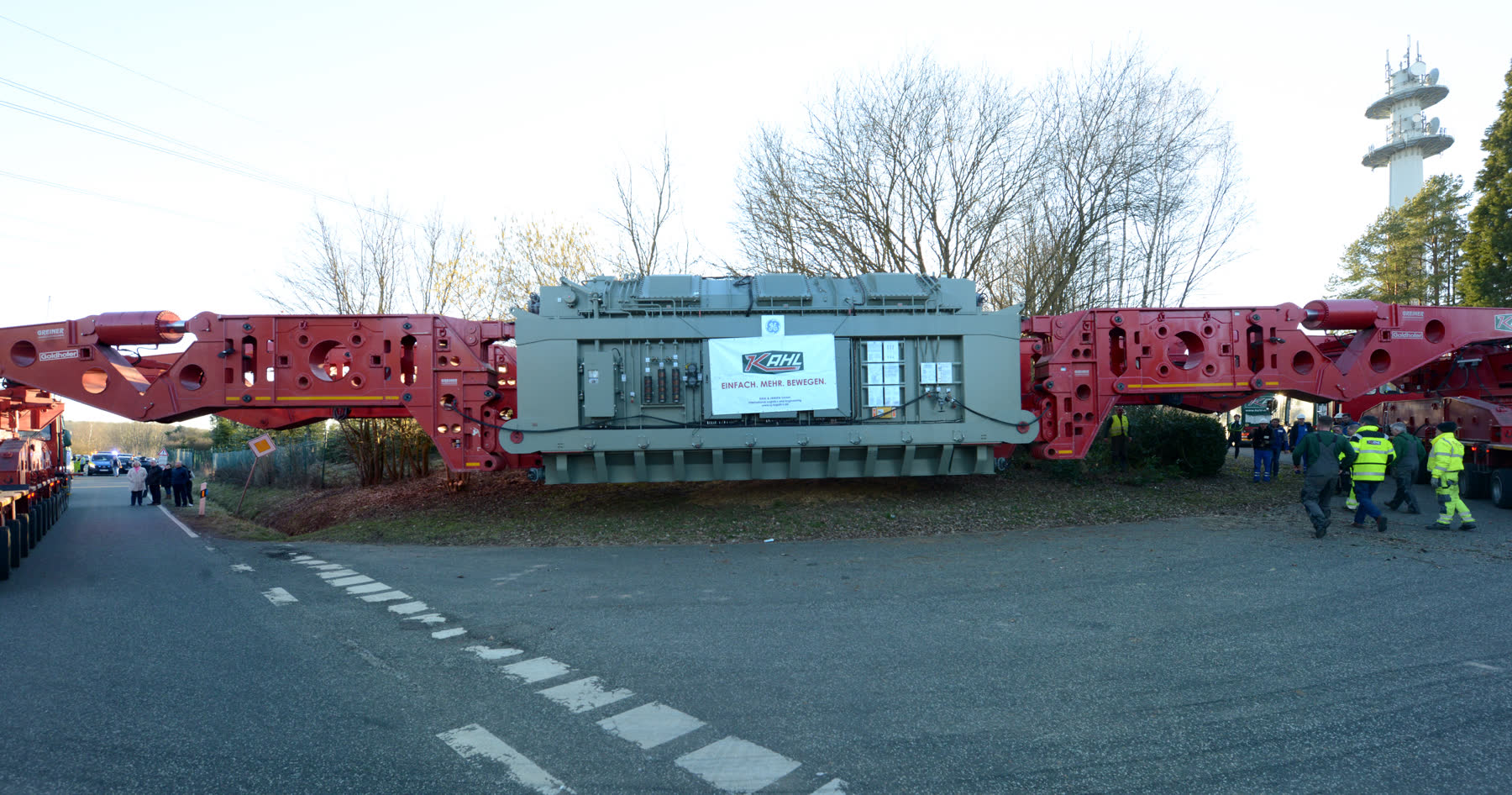
Large transformers take years to replace
In its 2021 filing BC Hydro reported 10 spare power transformers against a fleet of 672 at 60 kV and above. The same section of its 2019 filing gave 572 and the same 10 spares. Both describe the spares strategy as existing “to minimize impacts in the event of a failure”, in the singular, and neither connects it to an earthquake, to simultaneous losses, or to replacing many units at once.
No lead time for a replacement transformer is published anywhere in BC Hydro’s regulatory record. In the United States, average lead times for power transformers rose from around 50 weeks in 2021 to roughly 120 weeks, more than two years, by 2024.
Those are US market figures and not a forecast for British Columbia. That is what a utility is waiting on when it says years. A substation that loses its transformer bank is in a queue behind every other buyer.
What you can do
The only restoration time BC Hydro has published anywhere in this region is several weeks, for downtown customers, with years before the downtown system is completely restored. Nothing has been published for anywhere else. Weeks is the interval to prepare against, because it is the one the utility has put in writing.
- Assume anything that plugs in is unavailable, including things that look independent. A service station with full tanks and no power dispenses no fuel. Payment terminals and cordless phone handsets stop working.
- Keep light that does not need the grid, and keep it where you can reach it in the dark. A headlamp for each person beats a single torch for the household.
- Keep enough power for several days. A power bank large enough to refill a phone several times is the difference between having a phone and having a brick.
- Settle now what has to stay cold or stay powered. Medication that needs refrigeration, and any medical equipment that runs on mains power, need an answer worked out with a pharmacist or clinician in advance.
- Find out whether your heating needs electricity to run. A gas appliance that depends on an electric fan or control stops with the power.
Sources on this page
Numbered in the order they are cited. Each entry links back to where it is used.
- [1]ReportWest End Substation Project, Initial Application to the BCUC (CPCN), §2.2.1 Seismic Concerns and fn. 2BC Hydro / BCUC · 2025Open the document ↗
- [2]ReportBC Hydro F2020–F2021 Revenue Requirements ApplicationBC Hydro / BCUC · 2019No link to follow
- [3]ReportBC Hydro F2023–F2025 Revenue Requirements ApplicationBC Hydro / BCUC · 2021No link to follow
- [4]ReportBC Hydro facilities and employees prepared for seismic eventBC Hydro · 2011Open the document ↗
- [5]ReportBC Hydro prepares for natural disastersBC Hydro · 2013Open the document ↗
- [6]ReportAsset Management Strategy §2.2.16BC Hydro, via BCUC · 2021Open the document ↗
- [7]ReportAddressing the Critical Shortage of Power Transformers to Ensure Reliability of the U.S. GridNational Infrastructure Advisory Council / CISA · 2024Open the document ↗
- [8]ReportQ2 2025 transformer lead-time surveyWood Mackenzie, via POWER Magazine · 2025Open the document ↗
- [9]ReportDam Safety FAQBC HydroOpen the document ↗