Life afterwards
Sanitation
A toilet needs water to flush. The province expects disruption to water and wastewater systems to last many months.
Last reviewed
At a glance
The province expects water and wastewater disruption for many months. Some treatment plants meet a post-disaster standard, but this says nothing about the sewer network feeding them.
Expected disruption: Many months
Source: Provincial Earthquake Immediate Response Strategy ↗ · Ministry of Emergency Management and Climate Readiness, Province of BC · v1.0 Aug 2022; v1.1 administrative updates Aug 2026
Apartment toilets stop when the water does
The water goes first. Flushing takes water somebody has to spare, and after a major earthquake nobody has water to spare. Why the water stops, and for how long, is set out there.
A house has a garden, a bucket, and somewhere to dig. A unit on the twentieth floor has a bathroom, and when the water stops the bathroom stops with it.
PreparedBC tells residents to store four litres per person per day, for drinking and sanitation. Vancouver’s Rain City Strategy sets that against ordinary use: it “falls short of normal daily water use by more than 300 L per day, and provides the bare minimum for drinking and hygiene”.
Four litres covers drinking and washing. There is nothing in it for a toilet.
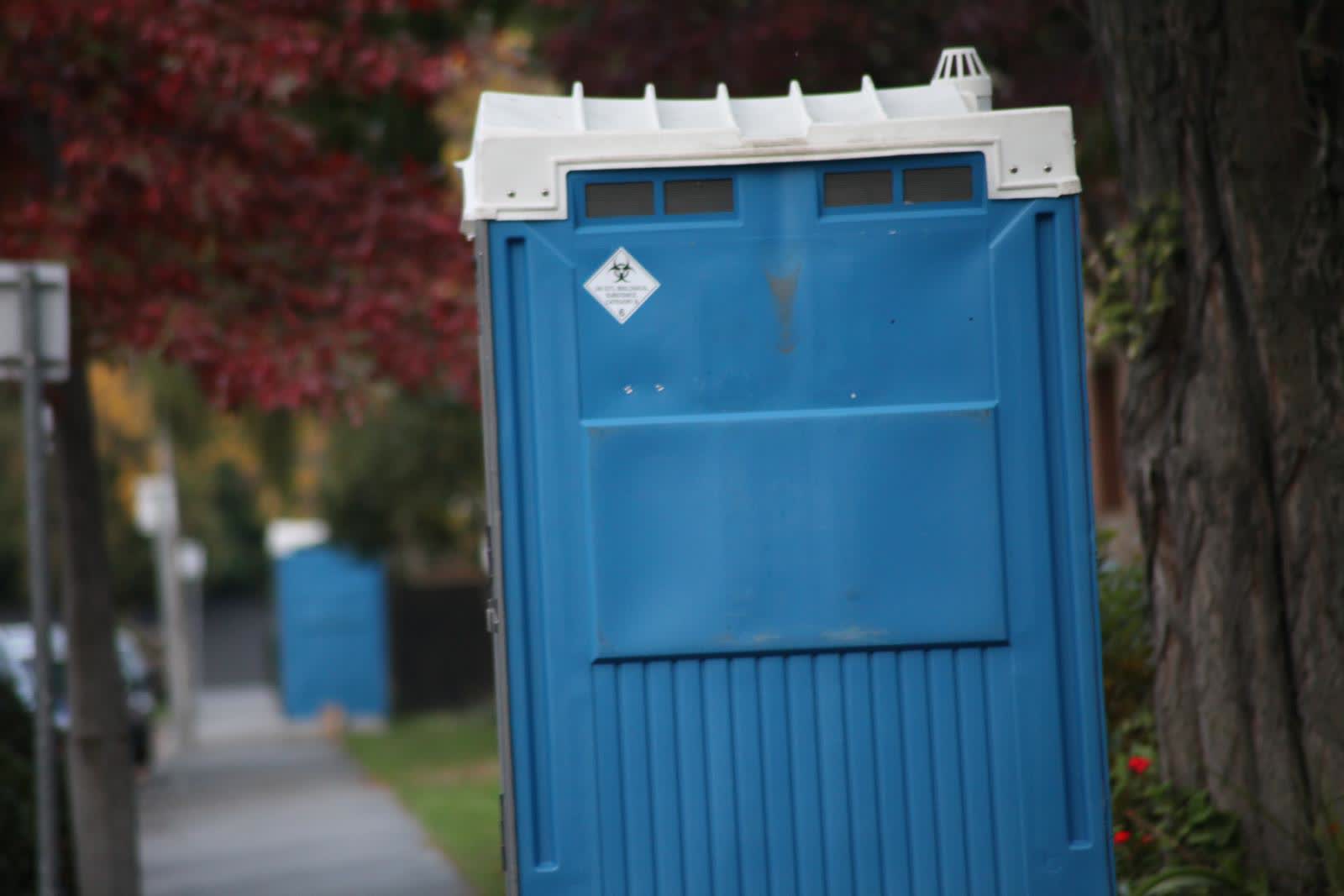
Wastewater disruption could last many months
“Disruption to water and wastewater systems are expected for many months following the event.” That is the Provincial Earthquake Immediate Response Strategy, the province’s own plan, and wastewater is named in it.
The province wrote it for its shallow crustal M7 planning scenario, and has published nothing equivalent for the megathrust. It covers the whole affected region, with no municipality broken out. Water and wastewater are merged into one sentence, so it does not say whether one returns before the other, and it does not separate the treatment plants from the pipes.
The province publishes shorter intervals for drinking water. They measure how long it takes to truck bulk water to people, which is a different question from when a sewer works again, and they are set out with water.
Stored waste creates a health risk
“Disruptions to waste collection may result in biological hazards. Due to mass congregation in shelter spaces and possible inadequate disposal of garbage and biological waste, disease outbreaks are possible.”
Possible is the province’s word, not likely and not expected.
Inadequate disposal is the step between a collection service that has stopped and a risk to health, and it is the one link in the chain a household can act on.
Waste collection is the garbage as well as the sewage, and a garbage truck needs roads and fuel like every other repair in this section. Shelters are where the province names the risk, because that is where people are gathered together.
The 2011 earthquake in Christchurch, New Zealand, shows what a failed collection system does to ordinary life. Chemical toilets were provided for about 30,000 residents and 1,141 portaloos were delivered. Temporary toilets stayed in use for weeks. Sewer repairs were projected to take more than a couple of years, and a later council estimate put full network restoration at up to 30 years. The last two figures are about rebuilding a network, not about how long anyone used a portaloo. All of them describe Christchurch, and none of them says anything about how long Richmond’s or Delta’s sewers would be out.
Treatment plants still depend on damaged sewers
Metro Vancouver lists what it has built or designed to a post-disaster standard, which means a structure the building code expects to keep working after the earthquake. The list includes the Annacis Island plant’s Stage 5 expansion, the North Shore secondary treatment plant, the new Hollyburn pump station, and the Sperling and Sapperton pump stations, which were under construction with seismic upgrades.
The work goes one plant and one pump station at a time. A pump station needs power to run, too. Sewage reaches those plants through pipes, and the sewers are the part whose assessed condition is not public.
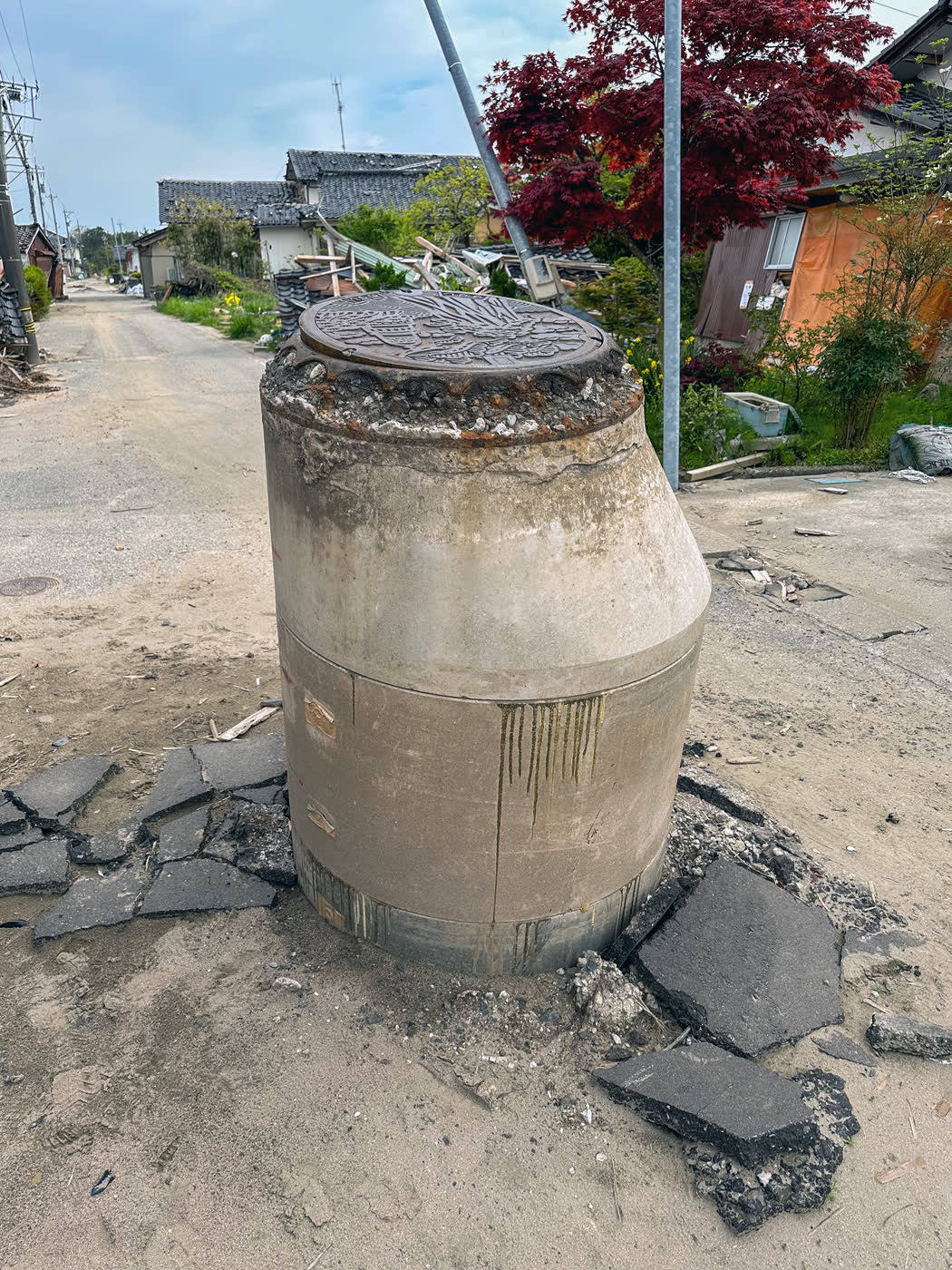
Annacis Island serves about 1.25 million people across 14 municipalities, and its remaining stage-gate approvals run from 2027 to 2030, with all components anticipated by 2035. Iona Island was built in 1963, serves about 750,000 people, and is being rebuilt for secondary treatment with seismic and flood-resilient design for its position on the delta.
“In 2018, the Liquid Waste Services Department completed a study evaluating seismic risks to Metro Vancouver’s sewers, pump stations and wastewater treatment plants. Its findings are being used to inform seismic resiliency decisions in project designs and capital planning.”
Older sewer pipes have not been assessed
The City of Vancouver’s Engineering Design Manual has a section headed Seismic Design Standards inside its sanitary sewer part, with a parallel one for storm drainage. A designer choosing pipe material and replacement strategy has to work from a risk assessment: how important the pipe is, how susceptible the soil is to shaking, and its potential for permanent ground deformation, which is ground that moves and does not move back. The strategies are named too, among them routing mains outside liquefaction zones, where saturated soil loses its strength and behaves like a liquid while the ground shakes.
“Minimize seismic risk to sewage and drainage services” is objective 3.4 of the City’s Healthy Waters Plan. Progress against it is measured on a rating scale of 1 to 5 by expert judgement.
Nothing published says how the network already under the streets would perform, and nothing says the replacement pipe performs better or worse than what it replaces. Nobody has measured it.
What you can do
The province expects water and wastewater disruption to last many months, and names inadequate disposal of waste as the step between a stopped collection service and a risk to health. That step is the one a household controls.
- Settle now how the household would contain human waste with no water to flush. A pail with a tight lid, heavy bags, and something dry to cover each use is the whole of it. It costs almost nothing and takes almost no storage space.
- Do not plan to flush with stored water. The four litres per person per day PreparedBC advises is for drinking and sanitation, and the City of Vancouver puts that figure more than 300 litres a day below normal use. Water put by for drinking and washing does not stretch to the toilet as well.
Vancouver’s advice to store water assumes a household with somewhere to put a bin of it. Stored water does not solve the toilet. Settle the pail before the water stops.
The full preparedness planSources on this page
Numbered in the order they are cited. Each entry links back to where it is used.
- [1]ReportProvincial Earthquake Immediate Response StrategyMinistry of Emergency Management and Climate Readiness, Province of BC · 2022Open the document ↗
- [2]ReportEarthquake and Tsunami Preparedness GuidePreparedBC / EMCR, Province of BC · 2024Open the document ↗
- [3]ReportRain City StrategyCity of Vancouver · 2019Open the document ↗
- [4]Analogue eventChristchurch sewerage repairs could take yearsStuff (NZ) · 2011Open the document ↗
- [5]Analogue eventChristchurch earthquake: Many face weeks of temporary toiletsNZ Herald · 2011Open the document ↗
- [6]Analogue eventChristchurch sewerage fix-up decades awayRNZ · 2015Open the document ↗
- [7]ReportBiennial Report 2017–2018, Integrated Liquid Waste and Resource ManagementMetro Vancouver · 2019Open the document ↗
- [8]ReportAnnacis Island Wastewater Treatment Plant (Stage 5)Metro VancouverOpen the document ↗
- [9]ReportIona Island Wastewater Treatment Plant ProjectsMetro VancouverOpen the document ↗
- [10]ReportCH2M, Seismic Risk Action Plan for Liquid Waste Services, commissioned by Metro VancouverCH2M for Metro Vancouver · 2018No link to follow
- [11]ReportEngineering Design ManualCity of Vancouver · 2026Open the document ↗
- [12]ReportKey Directions for the Healthy Waters PlanCity of Vancouver · 2025Open the document ↗