Life afterwards
Where help comes from
British Columbia’s earthquake plan stages resources with agencies outside the damaged region, then sends them in. A local crustal earthquake leaves those agencies available. A coast-wide megathrust may not.
Last reviewed
At a glance
The province's plan assumes agencies outside the impact area are unaffected and stages resources with them, and for a megathrust the same plan states that the United States will be unable to deliver mutual aid if it is also overwhelmed.
Expected disruption: Help arrives later, and US aid may not come
Source: Provincial Earthquake Immediate Response Strategy ↗ · Ministry of Emergency Management and Climate Readiness, Province of BC · v1.0 Aug 2022; v1.1 administrative updates Aug 2026
The province's plan assumes agencies outside the impact area are unaffected and stages resources with them, and a local crustal earthquake is the case where that assumption holds.
This is a planning assumption the province states, not a measured finding about how help would arrive.
Expected disruption: Outside agencies expected to be available
Source: Provincial Earthquake Immediate Response Strategy ↗ · Ministry of Emergency Management and Climate Readiness, Province of BC · v1.0 Aug 2022; v1.1 administrative updates Aug 2026
Outside help depends on damaged transport links
In the first days, road, rail, air and marine transport are disrupted and “existing supply chains will be inoperable”. Areas are isolated, unreachable by road because of landslides, liquefaction and collapsed bridges, and cut off further by damage to airports and marine ports. Inside that area, local capacity to respond “will be limited and delayed”. What that does to the crossings and the terminals is on transportation and large infrastructure.
Leaving is not the plan: “damage to transportation routes and the prioritization of essential personnel and supplies make mass evacuation impossible, and the public is directed to shelter in place.”
Disaster Response Routes are corridors kept open for emergency vehicles, and once they are activated the public is told to get off them as soon as possible. They are roads to leave, not roads to leave on. Getting around covers the signs.
The earthquake plan sends resources into the region
The province’s general emergency plan, the All-Hazard Plan, works from the bottom up. The province’s role under it is supplementary: it “will coordinate available resources to provide emergency response assistance that supplements but does not substitute for community resources”, and the first move belongs to the local authority. The plan allows that order to be turned around and treats it as the exception: a situation at the international or national level “may reverse or otherwise change the normal ‘bottom-up’ approach to response”.
The earthquake strategy makes the exception the rule. In a major earthquake the province “will stand up response measures outlined within this strategy and proactively deploy resources into the impact area”. Nobody has to ask first. The general plan has not been amended since 2016.
Cascadia reduces the help available outside
Agencies inside the impact area are reduced or delayed, while “those outside the impact area will be largely unaffected and functional”. The staging follows: “Provincial staging areas are located outside the impact area and will be used to organize, prioritize, and disseminate critical resources.”
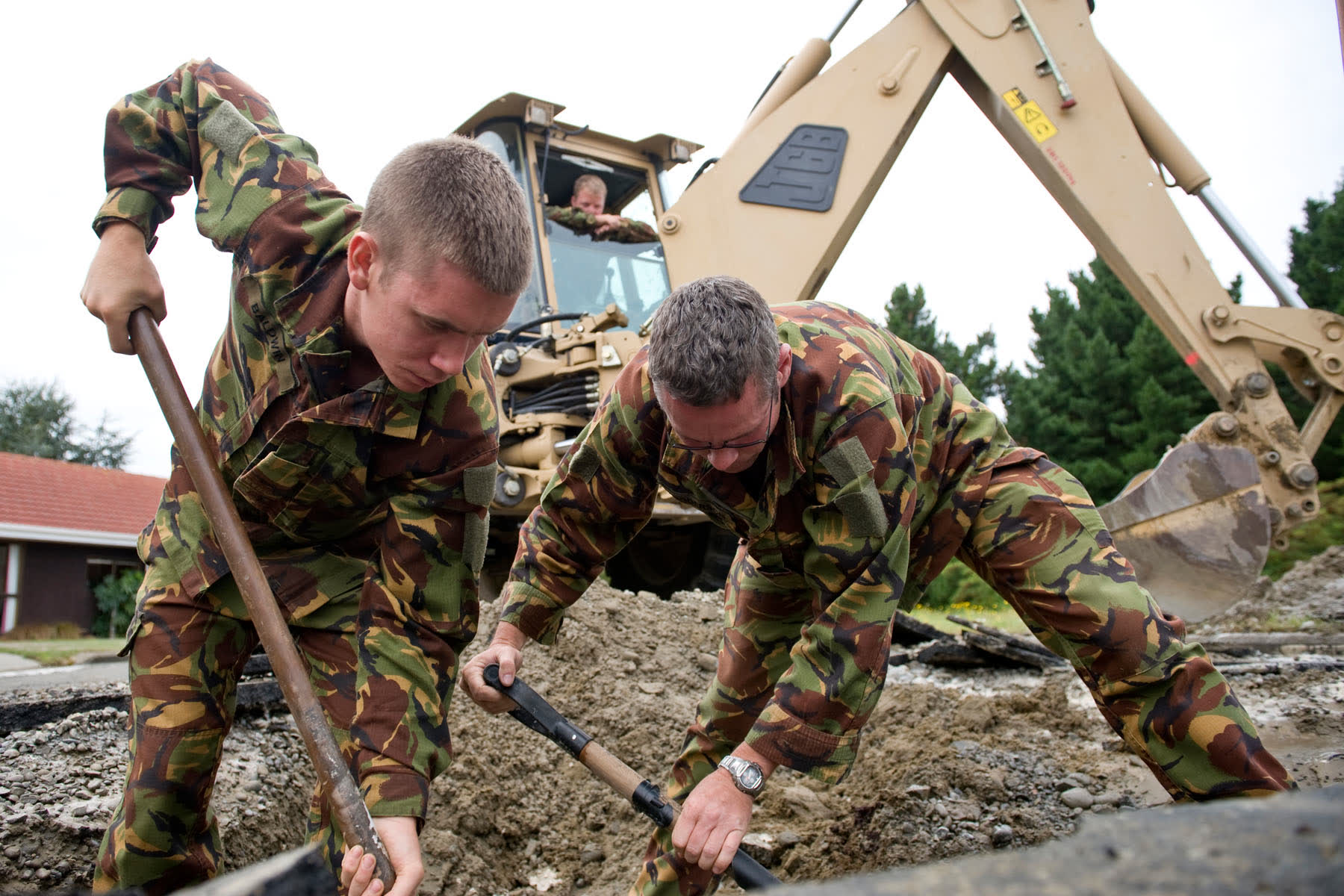
That is a planning assumption: what a province decides to plan against. It is not a measured finding about how help would arrive.
In the shallow crustal magnitude 7.0, the outside is the rest of the province
The province’s crustal planning scenario is a magnitude 7.0 beneath the Strait of Georgia, and its damage is concentrated and local. The impact area is the Lower Mainland. The rest of British Columbia, Alberta and the American Pacific Northwest are outside it, which is the case the staging plan is built for. Help still has to travel over damaged roads, and the first response is still the local one.
In the Cascadia magnitude 9.0, the province says the United States may be unable to help
From the Cascadia appendix of the province’s earthquake response strategy, on a rupture of the Cascadia subduction zone, the offshore fault that runs the length of the coast:
“a CSZ event would be devastating to B.C. as impacts would be felt over a very broad region, many remote communities might be cut off from aid, and the U.S. will be unable to deliver mutual aid if they are also overwhelmed by impacts.”
The province’s regional and central coordination centres, the PREOC and the PECC, decide what provincial support goes where. In this scenario both are “compromised due to damage to facilities and impacts on staff” and have to work from alternate locations.
The word the province uses is delayed: “resources from other parts of B.C., other provinces and the U.S. are delayed due to widespread transportation and communication disruptions.” The plan is that a community holds on until help arrives. The two scenarios sit side by side.
Mutual-aid agreements remain partly untested
In June 2016 the province ran Exercise Coastal Response, its first full-scale earthquake and tsunami exercise, with about 800 participants from 65 organisations. Two of its objectives were about help from outside British Columbia, and neither was tested. Activating the Pacific Northwest Emergency Management Arrangement: “(Not tested due to concurrent Exercise Cascadia Rising)”. Requesting activation of Alberta’s earthquake plan for British Columbia: “(Not tested due to real-world constraints)”.
British Columbia could not exercise its cross-border arrangement because its cross-border partners were exercising the same earthquake. It publishes summaries of these exercises. Full after-action reports are not published.
| Who would come | Under what |
|---|---|
| Alaska, Idaho, Oregon, Washington and Yukon | The Pacific Northwest Emergency Management Arrangement, established 1998 |
| The other provinces and territories | The Emergency Management Mutual Aid Agreement, a 2010 memorandum of the Canadian Council of Emergency Management Organizations |
| Alberta | A memorandum of understanding dated 2007, and the Earthquake Response Plan for British Columbia, which Alberta holds |
| The Canadian Armed Forces | A Request for Assistance under Contingency Plan PANORAMA |
The response framework predates the current law
The All-Hazard Plan is dated 4 November 2012 and was last amended on 22 June 2016. It promises that it “will be reviewed and updated by EMBC every four years”, naming an agency that is now the Ministry of Emergency Management and Climate Readiness, which publishes the earthquake response strategy.
The plan is made under the Emergency Program Act. The ministry’s own legislation page states that the Emergency and Disaster Management Act “replaced the Emergency Program Act in 2023”, and announces no successor to the framework or to the 2016 guide that sets out how a response is organised. The All-Hazard Plan was still the province’s published plan on 23 December 2025, the date the provincial emergency plans page was last updated.
What you can do
The province’s plan is that a community holds on until outside help reaches it, and it assumes communities work together before any provincial guidance arrives. That makes your street the place to start.
- Find out who on your street would need help first. Anyone who lives alone, anyone who could not get themselves out of a building, anyone whose medicine matters every day.
- Agree who checks on whom, before anything happens. It takes a conversation now and no equipment, and nobody can make the arrangement for you afterwards.
- Decide how long to hold out for, knowing the province’s own documents disagree. The earthquake response strategy says up to two weeks. The All-Hazard Plan says a minimum of 72 hours. Preparing sets out what each document says.
None of that replaces the response. It is what the province’s own plan expects to be happening while the response is on its way.
Sources on this page
Numbered in the order they are cited. Each entry links back to where it is used.
- [1]ReportProvincial Earthquake Immediate Response StrategyMinistry of Emergency Management and Climate Readiness, Province of BC · 2022Open the document ↗
- [2]ReportDisaster and Climate Risk and Resilience Assessment: Provincial ReportEMCR and Ministry of Energy and Climate Solutions, Province of BC · 2025Open the document ↗
- [3]ReportDisaster Response Routes, public pageProvince of BCOpen the document ↗
- [4]ReportThe All-Hazard PlanEmergency Management British Columbia · 2012Open the document ↗
- [5]ReportBritish Columbia Emergency Management SystemProvince of BC / EMBC · 2016Open the document ↗
- [6]ReportInitial Findings from Exercise Coastal ResponseEmergency Management BC · 2016Open the document ↗
- [7]ReportProvincial emergency exercise programEMCR, Province of BCOpen the document ↗
- [8]ReportGovernment emergency plansAlberta Emergency Management Agency, Government of AlbertaOpen the document ↗
- [9]ReportLegislation and regulationsEMCR, Province of BCOpen the document ↗
- [10]ReportProvincial emergency plansEMCR, Province of BCOpen the document ↗